Top Make Up Private Label Manufacturers for Global Buyers
Choosing the right make up private label manufacturer can shape a brand’s quality, margins, and reputation. Global buyers need more than attractive packaging and competitive quotes. They need evidence that a supplier can deliver consistent formulas, reliable documentation, and practical communication.
A capable manufacturer should explain its formulation process clearly. Ask for ingredient lists, product specifications, stability information, and batch records. Request physical samples, not only digital shade cards. A lipstick may look perfect on a screen, yet feel dry after several hours of wear. A foundation may match one skin tone but oxidize under store lighting. Small tests reveal important weaknesses.
Manufacturing standards also deserve close attention. Buyers should review quality systems, facility certifications, testing procedures, and traceability controls. These details help support product safety and responsible market entry. However, certificates alone do not prove excellent performance. A factory can hold impressive documents while offering slow replies or inconsistent samples. That assumption can fail.
This guide examines leading manufacturers for international buyers. It considers formulation expertise, minimum order quantities, packaging flexibility, production capacity, communication, and after-sales support. It also highlights questions that reduce avoidable risk. A trustworthy partner should discuss realistic timelines, material availability, and labeling responsibilities without making vague promises.
No supplier is perfect.
That matters. Buyers should compare factories against their product category, target market, budget, and launch schedule. The strongest choice is not always the largest manufacturer. It is the partner that provides transparent evidence, identifies limitations, and improves when problems appear.
What Are Make Up Private Label Manufacturers?
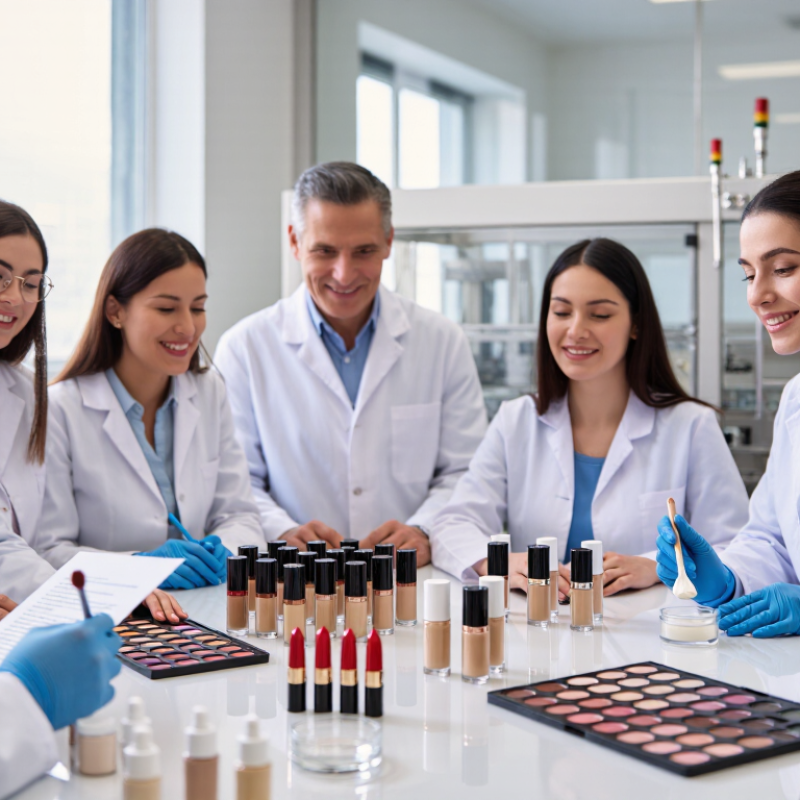
Makeup private label manufacturers are specialized companies that create cosmetic products for another business’s label. They may formulate, test, fill, package, and prepare products for shipment. In practice, a buyer can request a tinted balm, pressed powder, or liquid foundation with defined shade requirements. The manufacturer then turns that brief into samples, production batches, and finished units. That is the core model.
Experienced manufacturers usually support formulation adjustments, ingredient documentation, stability checks, color matching, and packaging selection. Reliable teams explain minimum order quantities, lead times, testing limits, and storage conditions before accepting a purchase order. They should also provide traceable batch records and clear quality procedures. Those details matter. A shade can change after filling, while a compact may crack during transport. Buyers should review samples under different lighting and test packaging before approving mass production. Some suppliers offer turnkey service; others only produce the formula. Confusing these roles can create delays and unexpected costs.
For global buyers, professional capability includes regulatory awareness in the target market. Manufacturers should help organize ingredient lists, safety files, labels, and product documentation. The buyer remains responsible for local approval decisions. Ethical production also requires honest claims, controlled sourcing, worker safeguards, and transparent subcontracting. No factory is perfect. A supplier may have strong formulation skills but limited shade development or weak export experience. Asking for recent audit evidence, sample results, and corrective-action records reveals more than polished sales language.
What Are Make-Up Private Label Manufacturers?
Make-up private label manufacturers develop and produce cosmetics that are sold under a buyer’s own brand. The following chart provides market context for global buyers by comparing worldwide beauty and personal care revenue across major product segments in 2024.
Market data: Statista Market Insights, 2024 estimates; values shown in billions of U.S. dollars. Product categories are presented without company or brand data.
Key Product Categories and Customization Options
Global buyers usually begin with core makeup categories:
foundation, concealer, powder, blush, bronzer, mascara, eyeliner, eyeshadow, lipstick, and lip gloss. Each category needs different technical checks. Foundation requires accurate shade matching and stable texture. Mascara needs controlled drying time and clean application. Lip products should feel comfortable without excessive drag.
Private label manufacturers may offer ready-made formulas or fully customized development. Buyers can adjust coverage, finish, color, fragrance, applicator shape, packaging materials, and label design. Refillable components, compact sizes, and recyclable packaging can support different market preferences. However, customization may increase testing time, minimum order quantities, and production costs. A cheaper option is not always the more reliable option.
Tips:
Request samples from several production batches. Test them under natural and artificial light. Check ingredient documents, stability results, packaging compatibility, and quality-control procedures. Confirm whether the manufacturer can support required market documentation. Shade names and color codes should be recorded carefully. Small errors create large rework costs. A perfect launch plan rarely survives real testing. Some formulas look attractive in a sample jar but perform poorly after filling. Keep evaluation records, allow extra time, and revise specifications when evidence demands it.
How to Choose the Right Manufacturer for Your Brand
Top Make Up Private Label Manufacturers for Global Buyers
Choosing the right private label makeup manufacturer requires more than comparing prices. A reliable partner should provide clear ingredient documentation, stable production capacity, and consistent quality control. Ask for recent test reports, product specifications, and sample batches before signing an agreement. A polished sample can still hide poor color stability or weak packaging performance.
Tips: Visit the facility when possible. Review its quality systems, production records, and batch-tracking process. Check whether the manufacturer follows recognized cosmetic manufacturing standards and can support safety assessments for your target markets. Discuss minimum order quantities, lead times, payment terms, and packaging options in writing. Small details matter.
Communication reveals expertise. Ask how the team handles formula adjustments, shade matching, filling defects, and delayed materials. Their answers should be specific, not promotional. Request a development timeline with approval checkpoints. Do not rely only on a sales representative’s promises; confirm technical details with qualified staff. I have seen buyers focus heavily on unit cost and overlook rework expenses, storage limits, or slow responses. That approach can damage a launch. A better evaluation balances product safety, practical experience, transparency, and long-term reliability. The cheapest option is rarely the simplest.