
Cosmetic Group USA
Why Choose a Private Label Makeup Line?
Why choose a private label makeup line in a crowded beauty market? The answer begins with control, not just lower production costs. Brand owners can select shades, textures, packaging, and product claims around a clear customer need. A warm-neutral foundation range, for example, can be tested with real shoppers before committing to a wider launch. This approach creates useful learning. It also exposes weak assumptions early.
Market evidence supports the opportunity. McKinsey’s The Beauty Market in 2023 report projects the global beauty industry could approach $590 billion by 2028, with annual growth near 6%. Circana reported that U.S. prestige makeup sales increased strongly in 2023, reflecting continued demand for complexion, lip, and eye products. These figures do not guarantee success. They show a market with active spending and changing preferences. The numbers are directional, not a promise.
A private label makeup line can also shorten the distance between customer feedback and product improvement. A retailer may notice that a concealer creases after several hours, then request a revised formula or applicator. That practical feedback matters more than attractive packaging alone. However, private label is not effortless. Responsible brands still need qualified manufacturers, documented ingredient reviews, stability testing, shade consistency, and transparent labeling. These steps support consumer trust and align with established quality practices. Reports from McKinsey and Circana provide valuable context, yet local customer research remains essential. Trends can guide the decision. They cannot replace evidence from your own buyers.
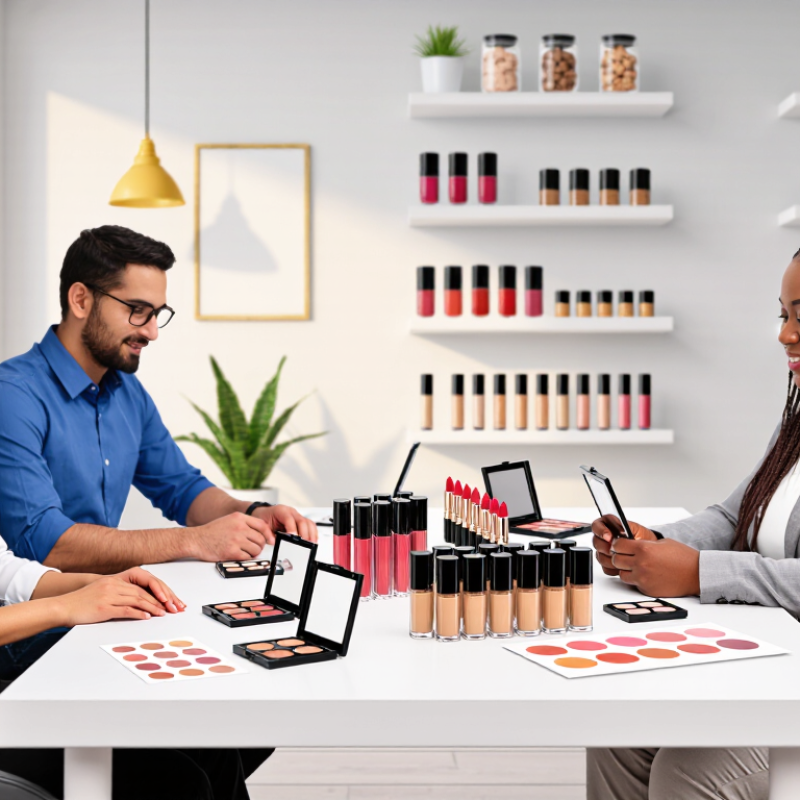
What Is a Private Label Makeup Line?
Why Choose a Private Label Makeup Line?
What Is a Private Label Makeup Line?
A private label makeup line is produced by a specialized manufacturer and sold under your own name. The supplier may offer ready-made formulas, packaging options, or controlled customization. You choose the shade range, finish, container, and product positioning. The manufacturer usually manages formulation, filling, and batch production.
This model can reduce development time compared with creating every formula from zero. McKinsey’s 2023 beauty report estimates that the global beauty market could reach about $590 billion by 2028. That growth creates opportunity, but crowded shelves demand sharper product decisions. A private label line should not rely on packaging alone. Ask for ingredient lists, stability data, microbiological testing, and manufacturing quality records. Product claims also need clear evidence.
There is a learning curve.
Tips: Request samples from several production batches. Compare color, texture, scent, and application under consistent lighting. Check minimum order quantities and lead times before planning a launch. NIQ’s 2024 State of Private Label report shows that private-label products continue gaining consumer acceptance across many markets. Still, lower cost does not guarantee stronger performance. A rushed formula, weak shade matching, or unclear instructions can damage customer trust. I have found that a smaller, carefully tested collection often communicates more expertise than a large range with inconsistent results.
Why Choose a Private Label Makeup Line? - What Is a Private Label Makeup Line?
A private label makeup line uses an existing cosmetic formula supplied by a manufacturer and sells it under a retailer’s or creator’s own name, packaging, and positioning. The comparison below highlights the main business and product considerations.
| Dimension | Private Label Makeup Line | Why It Matters | |
|---|---|---|---|
| Product Definition | A pre-developed cosmetic formula is selected from a manufacturer’s existing product range and sold under a new label. | A product is developed or significantly modified to meet a brand’s specific formula requirements. | Private labeling provides a practical way to create a branded product line without developing every formula from the beginning. |
| Formula Development | The formula is generally already developed and may allow limited options such as shade, fragrance, finish, or ingredient selection. | The buyer usually participates in product briefs, testing, revisions, stability checks, and final formula approval. | Using an existing formula can reduce development complexity and shorten the path from product selection to launch. |
| Brand Ownership | The seller owns and controls the brand name, visual identity, packaging design, and marketing message. | The seller also controls the brand, while the formula may involve separate manufacturing, development, or intellectual-property arrangements. | Private labeling allows businesses to build brand recognition instead of competing only as a reseller of another company’s finished brand. |
| Packaging Options | Packaging may include stock components, printed labels, cartons, color selection, and other available customization options. | Packaging can be developed more extensively, but custom components usually require additional design, tooling, sampling, and production planning. | Stock or semi-custom packaging can help control initial cost and reduce packaging-development time. |
| Minimum Order Quantity | The minimum order quantity is set by the manufacturer and varies according to the formula, packaging, shade count, and production process. | Minimum quantities are often influenced by formulation development, raw-material purchasing, component orders, and dedicated production requirements. | A lower or more flexible starting quantity can make market testing easier, although no universal private-label minimum applies to every supplier. |
| Launch Speed | Usually faster because the formula and manufacturing process already exist; final timing still depends on sampling, artwork approval, packaging, production, and testing. | Usually slower because the product must pass through development, revisions, compatibility checks, and production preparation. | Private labeling is suitable for businesses that want to validate demand or expand a product range more quickly. |
| Cost Structure | Costs commonly include product units, packaging, labels, artwork, samples, testing where required, shipping, and applicable regulatory work. | Costs may additionally include research and development, laboratory work, repeated samples, specialized ingredients, tooling, and larger component commitments. | Private labeling can reduce upfront development costs, but the total budget still depends on packaging, order quantity, testing, and market requirements. |
| Product Differentiation | Differentiation is commonly created through brand positioning, shade selection, packaging, claims, merchandising, and customer experience. | Differentiation can be built directly into the formula, texture, performance characteristics, ingredient profile, and product concept. | Private label works well when the competitive advantage comes from branding, distribution, audience trust, or a focused product assortment. |
| Quality and Safety Responsibility | The manufacturer should provide relevant product information and quality documentation, while the brand owner must verify that products, labels, claims, and sales practices meet the laws of each target market. | Responsibilities are shared across development and manufacturing partners, with the brand owner still responsible for proper market compliance and product claims. | A private label is not automatically compliant simply because a supplier provides the formula; market-specific requirements must be checked before sale. |
| Best Fit | New beauty brands, retailers, creators, salons, makeup artists, and businesses testing a focused collection. | Brands that require a distinctive performance profile, proprietary concept, specialized ingredient system, or highly specific product experience. | The right model depends on the desired balance between speed, control, investment, differentiation, and operational complexity. |
Important: Manufacturing terms, minimum order quantities, lead times, documentation, testing requirements, and labeling obligations vary by product type and sales market. Confirm these details with the selected manufacturer and the relevant cosmetic regulations before launch.
Related Posts
-
What Is the Cost to Create Your Own Makeup Line?
-
How to Start a Makeup Line and Find Reliable Suppliers?
-
China Top 10 Make Up Private Label Manufacturers?
-
What Are the 2026 Top Private Label Makeup Suppliers?
-
Why Make Makeup: Tips to Enhance Your Look Effortlessly?
-
How to Find Top China Private Label Makeup Suppliers?