Why Create a Makeup Line for Your Global Market?

Creating a makeup line for a global market is not simply a larger version of a local launch. It is a commitment to understanding different faces, climates, routines, budgets, and beauty expectations. Rihanna, founder of Fenty Beauty, has said, “Makeup is there for you to have fun with.” That idea matters, but global beauty also requires discipline. Fun attracts attention. Trust earns repeat purchases.

A strong create makeup line strategy begins with real market research. Teams should study undertones, foundation shade preferences, humidity, application habits, and local shopping behavior. A shade that performs well in New York may oxidize differently in Singapore. A cream product may feel luxurious in a cool climate, but uncomfortable in high humidity. Packaging also needs careful evaluation. Labels should remain clear across languages, and product claims must follow applicable regional requirements. Ingredient reviews, safety assessments, stability testing, and reliable manufacturing records support professional decision-making.

However, research is never perfect. Consumer surveys can miss quieter customers. Trend reports can become outdated quickly. Even experienced teams may launch a product that looks promising but feels impractical in daily life. That is why sampling, regional feedback, and post-launch monitoring matter. A global line should leave room for correction. It should listen before expanding. The goal is not to make one product for everyone, but to build an inclusive system that respects local needs without losing its identity. In this market, expertise is visible in the details: a wearable shade range, a readable label, and a formula that performs beyond the laboratory.
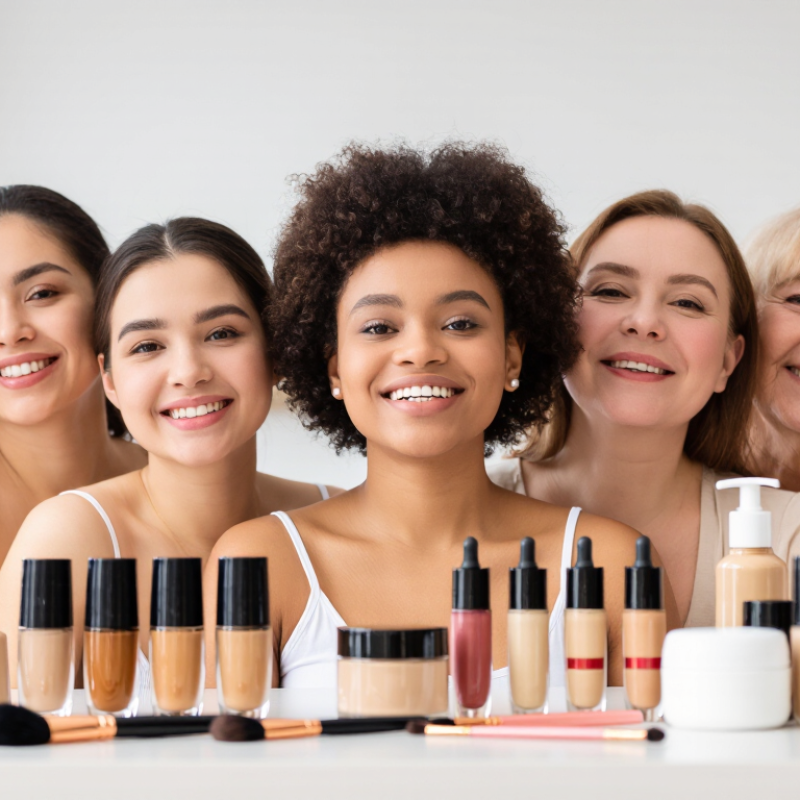
Why Create a Makeup Line for Your Global Market?

Global Market Demand and the Rise of Makeup Brands

Global demand is reshaping the makeup industry. Consumers now discover products through short videos, online tutorials, and local beauty communities. They want more than attractive packaging. They seek suitable shades, clear ingredients, comfortable textures, and trustworthy performance. A global makeup line can answer these needs when research begins locally. Market interviews, search trends, and retail feedback reveal different expectations. In one region, lightweight foundation may matter most. In another, humidity resistance or deeper shade ranges may lead decisions.

Tips: Test products with diverse users before launch. Check shade accuracy under daylight, indoor lighting, and phone cameras. Use local language carefully. Avoid promises that testing cannot support. Review ingredient rules and labeling requirements in every target market. Reliable documentation builds confidence with customers and retail partners.

Rising demand also creates pressure to move quickly. That pressure can produce weak translations, repeated shades, or products designed for only one beauty ideal. A careful team should compare sales data with customer comments and return reasons. Numbers show what happened, but conversations often explain why. I have found that early feedback is sometimes uncomfortable, yet it prevents expensive corrections later. Even strong research can miss cultural details. Makeup habits change quickly. A successful line must keep listening, testing, and adjusting without losing product safety or consistency.

Cultural, Regional, and Consumer Needs in Beauty Markets

A global makeup line should begin with local realities, not a translated color chart. Beauty consumers differ in skin tone, undertone, climate, rituals, and spending power. McKinsey & Company’s 2023 beauty report projects the global beauty market will approach $580 billion by 2027. Growth alone is not enough. A foundation that wears well in dry northern air may separate quickly in humid coastal weather. Consumers also expect wider shade ranges and formulas that respect local preferences, such as lightweight coverage or long-wear finishes.

Regional research can reveal details that global surveys miss. Euromonitor International reports that consumers increasingly seek personalized products and culturally relevant experiences. In practice, this may mean testing warm, olive, and deeper undertones in several lighting conditions. It may also mean adjusting packaging sizes for different household budgets. NIQ’s 2024 beauty insights highlight continued demand for value, efficacy, and convenience. These needs often overlap, but not perfectly. A mistake is assuming one “global consumer” exists.

Tips: Interview local makeup artists and consumers before product development. Test formulas in real heat, humidity, and daylight. Track returns by shade and region. Use trained local reviewers, not only central teams. Check translated claims carefully. Small wording errors can weaken trust. Regional data may also be incomplete, so document assumptions and revisit them quarterly. A beautiful product can still fail when its texture, shade, or message feels imported rather than understood.

Why Create a Makeup Line for Your Global Market? — Cultural, Regional, and Consumer Needs in Beauty Markets

Illustrative market-planning matrix. Regions are diverse, and the considerations below are starting points for local research—not assumptions about every consumer.

Market Area Consumer and Cultural Considerations Climate and Use Context Product and Portfolio Opportunities Localization and Compliance
North America Consumers vary widely in skin tone, undertone, age, and preferred makeup style. Shade inclusivity and clear product information can support a broader audience. Conditions vary by location and season, from dry or cold winters to hot, humid summers. Offer broad foundation and concealer shade ranges, multiple finishes, and products suited to different wear preferences and seasonal routines. Plan for country-specific language and labeling requirements. In the United States, cosmetics are regulated by the FDA; applicable MoCRA requirements should be reviewed for each product and business role.
Europe Consumer preferences and languages differ across countries. Shade selection and beauty routines should be tested with local consumers rather than treated as uniform across the region. Climate ranges from maritime and temperate conditions to hotter Mediterranean summers, creating varied preferences for wear and finish. Consider adaptable complexion ranges, clearly described finishes, and options for both understated and more expressive makeup looks. For EU markets, cosmetics are governed by Regulation (EC) No 1223/2009, including requirements such as a responsible person, safety assessment, and product notification. Check current local requirements and language rules.
East Asia Japan, South Korea, China, and other markets have distinct consumer preferences and regulatory systems. Test textures, shades, packaging, and claims separately in each target market. Some markets experience humid summers and colder or drier winters; conditions differ substantially by location. Research lightweight textures, layering compatibility, and locally preferred shade and finish ranges. Treat skincare-related positioning as a product- and claims-specific decision. Translate packaging and instructions appropriately, and assess ingredient, claim, notification, and registration rules market by market. Product categories and permitted claims can differ.
South Asia Skin tones, undertones, languages, and beauty practices are highly varied. Avoid equating lighter shades with better or more desirable outcomes. Many areas experience strong seasonal variation, including hot weather and monsoon conditions; local conditions differ by country and region. Develop complexion shades tested across local undertones and evaluate wear in heat and humidity where relevant. Offer practical formats suited to local routines and price expectations. Review each country’s cosmetics rules, ingredient restrictions, claims, and labeling requirements. India, for example, has Cosmetics Rules, 2020; requirements should be checked against current guidance.
Middle East and North Africa Consumer needs vary by country, community, and individual preference. Some consumers may seek products aligned with particular ingredient or religious considerations; validate demand locally. Hot, sunny, or dry conditions occur in many locations, but climates also vary across the region. Test texture, comfort, and wear under relevant local conditions. Provide transparent ingredient information and consider a range of coverage and finish options. Check national import, ingredient, labeling, and product-registration rules. Do not imply religious certification or suitability unless the product meets the relevant standard and requirements.
Latin America The region includes a wide range of skin tones, languages, cultures, and beauty preferences. Shade matching should reflect local consumer testing. Tropical, subtropical, high-altitude, and temperate environments are all present, so heat and humidity needs are not the same everywhere. Consider inclusive complexion ranges and evaluate wear, comfort, and finish in the climates where products will be sold. Spanish and Portuguese localization may be relevant depending on the country. Verify local rules for cosmetic claims, ingredient disclosures, registration, and labeling.
Sub-Saharan Africa Countries and communities are highly diverse, with a broad range of complexions, undertones, languages, and beauty preferences. Avoid relying on a single regional shade profile. Climate varies from humid tropical areas to arid and highland environments; test products in intended sales locations. Prioritize locally tested shade breadth and undertone accuracy. Assess texture, wear, and packaging for local use conditions and distribution needs. Requirements differ by country and may include product registration, ingredient review, and local-language labeling. Confirm rules with the relevant national authorities before launch.

Product Localization for Different Skin Tones and Preferences

Creating a makeup line for a global market requires more than translating shade names. Skin tones vary across regions, families, and even the same household. Undertones matter too. A foundation that looks golden in daylight may appear orange under indoor lighting.

Product localization should begin with observation, not assumptions. Work with local makeup artists, consumers, and trained evaluators during shade development. Photograph swatches beside real skin in daylight and under common indoor bulbs. This creates useful evidence for color, texture, coverage, and finish decisions. Qualified cosmetic chemists should also assess formula stability and skin compatibility across different climates.

Preferences can change with climate and daily routines. In humid cities, lightweight formulas may feel more comfortable than heavy coverage. In dry conditions, flexible textures can reduce the look of flaky areas. Some consumers prefer a soft matte finish, while others want visible skin texture and glow. Packaging and applicators need local testing too. A pump may suit one routine, while a compact works better for quick touch-ups. Readable shade labels and clear usage instructions improve everyday use.

Reliable localization includes repeat testing after launch. Track shade returns, customer comments, and product performance across markets. Do not treat every complaint as a simple preference. It may reveal oxidation, poor undertone matching, or confusing instructions. Our own testing can be imperfect. A shade gap may remain. That gap should be documented, not hidden. Independent safety reviews and compliant ingredient checks support responsible development.

Why Create a Makeup Line for Your Global Market?

Regional population context for product localization

How to use this context: Large, diverse regions can call for broader shade ranges and locally informed product choices. Population is not a measure of skin tone or consumer preference; research undertones, shade depth, climate, routines, and local feedback in each target market.

Source: United Nations, World Population Prospects 2024. Approximate mid-year regional population, in billions.

Regulatory, Packaging, and Distribution Considerations

A global makeup launch needs a compliance plan for each destination, not one universal checklist. In the European Union, a designated Responsible Person, a safety assessment, and a Product Information File are required before sale. Products must also be notified through the Cosmetic Products Notification Portal. In the United States, MoCRA requires applicable facility registration, product listing, and safety substantiation. Details differ, and rules can change. Verify requirements with qualified local specialists before printing labels or shipping stock.

Packaging must survive transit and fit local disposal systems. The OECD’s 2022 Global Plastics Outlook reported that only 9% of plastic waste was recycled globally in 2019. That makes material choice more than a visual decision. Check whether local facilities accept the pack, and test pumps, seals, and formulas after heat and vibration exposure. A sleek carton can still fail. Leave room for language, ingredient, and market-specific label changes; otherwise, relabeling can add cost and delay.

Distribution assumptions also need testing. The World Bank’s 2023 Logistics Performance Index compares 139 economies across areas including customs, infrastructure, and delivery timeliness. Use those differences to plan realistic lead times, safety stock, and storage conditions. Model duties, returns, warehousing, and relabeling in the landed cost. It looks neat in a spreadsheet. It rarely stays neat. A pilot shipment can reveal leakage, damaged cartons, or slow clearance before a larger order is committed.

Brand Growth Through Global Makeup Market Expansion

Creating a makeup line for global growth is not simply a matter of translating a label. It means learning how people shop, apply, and discuss color in each market. A lipstick shade that looks warm under one store’s lighting may appear orange under another. Small details matter.

Expansion works best when research shapes the product range. Review local search terms, retailer assortments, climate, and common routines before choosing shades or textures. In humid cities, wear and touch-up habits may differ from those in colder regions; treat this as a hypothesis, not a rule. Test samples with local users and record feedback on undertone, scent, wear time, and packaging. A compact trial can reveal more than a broad survey. Still, no group represents every customer.

Operational choices influence trust, too. Provide clear shade information, maintain consistent quality checks, and choose packaging that can withstand shipping and daily use. Build distribution plans around realistic lead times, local customer support, and demand forecasts rather than optimistic launch targets. Track repeat purchases, returns, and shade-related complaints by market. Adjust when evidence points to a mismatch. Global growth is rarely tidy; early assumptions will need correction.

Social media & sharing icons powered by UltimatelySocial
Facebook
LinkedIn
Instagram
Tiktok