Choosing the best makeup line manufacturer in China requires more than comparing prices or browsing attractive product catalogs. A dependable partner should combine formulation experience, controlled production, transparent communication, and documented quality procedures. Look for facilities following recognized cosmetic GMP practices, with clear batch records, stability testing, microbial checks, and reliable ingredient documentation. These details matter when a foundation must remain smooth, a lipstick must resist sweating, or a mascara must keep its texture after repeated opening.
Cosmetic scientist and industry educator Perry Romanowski has emphasized a practical standard: “A good cosmetic product must be safe, stable, and effective.” That principle should guide every factory evaluation. Ask for laboratory reports, production photographs, sample-development timelines, minimum order quantities, and references from comparable brands. A serious manufacturer will explain what it can produce, not promise everything. Small details reveal experience, such as whether the factory tests shade consistency under different lighting or checks packaging compatibility over time.
There is no flawless shortlist.
A polished sample may still hide weak after-sales support, delayed documentation, or inconsistent mass production. This is where careful verification becomes essential. Visit the facility when possible, review a pilot batch, and record each approved specification in writing. The strongest makeup line manufacturer is not always the cheapest or largest. It is the partner that protects product quality, communicates limitations honestly, and helps your brand improve through every production cycle. Mistakes can still happen. The real question is how clearly and responsibly the manufacturer responds.
The best makeup line manufacturer in China is not simply the cheapest supplier. It should combine reliable formulation, stable production, and clear communication. China’s National Bureau of Statistics reported cosmetics retail sales of about RMB 414 billion in 2023. This demand requires manufacturers to scale without weakening quality.
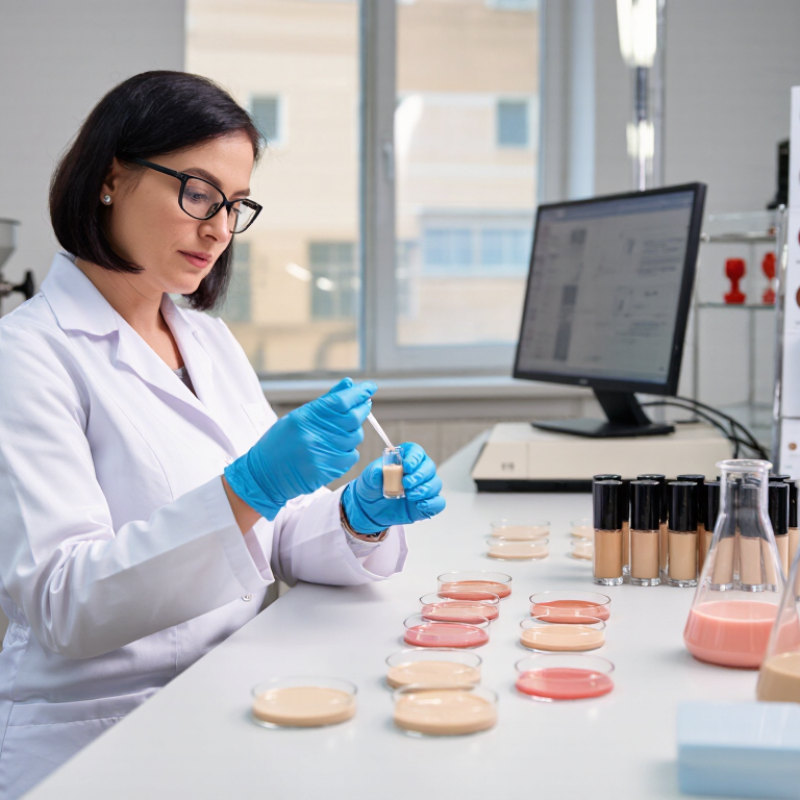
In practical evaluations, I look for ISO 22716-based practices, documented batch records, and controlled raw-material storage. A strong manufacturer should provide stability testing, microbial testing, and shade consistency data. These details matter for foundations, lip products, and cream blushes. McKinsey’s China beauty market research also highlights faster consumer demand for innovation and product differentiation. Therefore, a capable partner should support texture trials, packaging tests, and small pilot runs. Cheap production alone is not enough.
Tips: Ask for recent audit evidence, not only a certificate. Request three production samples from different batches. Check whether the factory explains failed tests honestly. That answer can reveal more than polished sales material. Also confirm minimum order quantities, lead times, artwork controls, and product claim review. Euromonitor International’s beauty research shows that consumers increasingly value ingredient transparency and product performance. Manufacturers should therefore provide traceable ingredient documentation and realistic claims. Some factories promise everything. That is a warning sign. A better choice admits technical limits and records corrective actions clearly.
What Is the Best Makeup Line Manufacturer in China?
How to Evaluate Product Quality, Safety, and Regulatory Compliance
The best manufacturer is not judged by factory size or attractive samples. Evaluate its quality system first. ISO 22716-based procedures should cover raw-material approval, weighing, filling, cleaning, storage, and batch release. Ask for recent audit records, complete batch files, certificates of analysis, and corrective-action reports. ISO’s 2023 Survey recorded more than 1.26 million ISO 9001 certificates worldwide, but certification alone cannot prove cosmetic safety.
Test the formula before discussing large orders. Request microbial limits, preservative challenge testing, stability data, heavy-metal screening, and packaging-compatibility results. Examine a lipstick after heat exposure. Check whether the cap loosens, the color changes, or the odor turns sharp. These small details reveal weak controls. The EU Safety Gate 2023 report recorded 3,412 product alerts, with chemical risks representing 32%. Cosmetic ingredients therefore need careful screening, not casual paperwork.
Regulatory capability matters across markets. A reliable Chinese facility should understand NMPA requirements and support EU Regulation 1223/2009 or US MoCRA documentation when needed. Confirm product information files, ingredient reviews, safety assessments, claims evidence, and traceability records. Conduct a live factory audit, including water systems and retained samples. Do not accept copied test reports. I would also require a mock recall. It may feel excessive, yet one missing batch record can delay an entire launch. My own evaluation can still miss hidden subcontracting, so supplier controls should be reviewed repeatedly.
The best makeup line manufacturer in China is not simply the largest factory. It should combine formulation expertise, stable production, documented quality control, and responsive communication. McKinsey’s 2023 beauty report projects the global beauty market could reach about $590 billion by 2030. This growth increases demand for flexible OEM and ODM manufacturing services.
Available services commonly include product formulation, shade matching, sample development, packaging design, filling, assembly, and batch inspection. A capable manufacturer can produce foundation, concealer, powder, blush, highlighter, eyeshadow, lipstick, lip gloss, mascara, and setting products. Technical teams should perform stability, microbiological, compatibility, and heavy-metal testing where appropriate. ISO 22716-based procedures can strengthen production discipline. Grand View Research also reports continued growth in color cosmetics, although market forecasts can differ by region and research method. That uncertainty deserves attention.
Tips: Request a complete sample-to-production timeline. Check whether testing reports match the final formula. Ask about minimum order quantities, shade consistency, packaging tolerance, and corrective-action records. A factory visit may reveal clean filling rooms, labeled raw materials, and controlled storage temperatures. Still, no supplier is perfect. A polished showroom can hide weak documentation. Independent verification remains wise. My practical view is simple: compare technical evidence, not only attractive samples or low quotations.
What Is the Best Makeup Line Manufacturer in China?
Price, minimum orders, and production capacity reveal more than a polished factory presentation. A low unit quote may exclude packaging, color matching, testing, or mold fees. During supplier reviews, I compare itemized quotations instead of headline prices. A basic lip product might appear inexpensive, yet custom decoration can raise the final cost sharply. Ask whether prices cover samples, cartons, inspections, and delivery to your destination.
Minimum order quantities also change the real budget. Some manufacturers accept 500 to 1,000 units for standard packaging, while custom components may require several thousand. Lower quantities reduce inventory risk but often increase the unit price. I once underestimated printed component costs because the supplier’s minimum applied to each shade, not the whole collection. That detail matters.
Production capacity needs practical evidence. Request monthly output, active production lines, staffing levels, and recent lead times. A large facility is not automatically reliable. It may prioritize bigger orders during seasonal demand. Check whether the factory can produce your formula, packaging, and shade range within one schedule. Ask for a pilot run before committing to a large order. Capacity claims can sound impressive. Actual delivery records are better. A balanced comparison should measure total landed cost, manageable order size, and consistent production quality, not price alone.
| Manufacturer Profile | Typical Product Focus | Indicative Unit Price (USD, EXW) |
Typical MOQ per SKU | Estimated Monthly Capacity | Typical Development Lead Time | Common Compliance Capabilities | Best Fit |
|---|---|---|---|---|---|---|---|
| Profile A: Startup-Friendly Private-Label Factory | Lip gloss, lip oil, mascara, liquid foundation, pressed powder, basic skincare-makeup hybrids | $0.80–$3.50 | 500–2,000 units | 100,000–500,000 units/month | 30–60 days after artwork and formula approval | GMP-based production, basic microbiological testing, ingredient documentation, export labeling support | New brands, online launches, product testing, and limited initial investment |
| Profile B: Mid-Size OEM/ODM Factory | Complete makeup lines, foundations, concealers, blush, eyeshadow palettes, lip products, setting products | $1.20–$6.00 | 1,000–5,000 units | 500,000–2,000,000 units/month | 45–75 days, depending on formula and packaging customization | GMP or ISO 22716-style systems, stability testing, compatibility testing, COA support, export documentation | Growing brands requiring broader product selection and repeatable production |
| Profile C: Large-Scale Color Cosmetics Manufacturer | High-volume foundation, cushion products, pressed powders, mascaras, lipsticks, and multi-SKU collections | $1.50–$8.00 | 5,000–20,000 units | 2,000,000–10,000,000 units/month | 60–100 days for customized formulas and packaging | Formal quality-management systems, batch traceability, stability testing, shade consistency controls, regulatory support | Established brands, retail programs, and high-volume replenishment |
| Profile D: Premium Clean-Beauty OEM/ODM Facility | Natural-claim makeup, mineral makeup, vegan formulas, refillable packaging, makeup-skincare products | $2.50–$12.00 | 2,000–10,000 units | 200,000–1,000,000 units/month | 60–120 days, including formula validation and claim review | GMP production, ingredient traceability, claim substantiation support, stability testing, selected organic or vegan documentation | Premium positioning, clean-beauty concepts, and sustainability-focused launches |
| Profile E: Packaging-Integrated Manufacturer | Color cosmetics with custom bottles, tubes, compacts, palettes, applicators, and gift-set packaging | $2.00–$10.00 | 3,000–15,000 units | 300,000–3,000,000 units/month | 75–150 days when new molds or custom components are required | Packaging quality inspection, decoration testing, compatibility testing, batch documentation, export packing support | Brands prioritizing distinctive packaging and coordinated product launches |
| Profile F: Flexible Small-Batch Contract Manufacturer | Simple lip products, loose powder, blush, brow products, makeup kits, and seasonal collections | $1.00–$5.50 | 100–1,000 units | 30,000–200,000 units/month | 20–50 days for stock formulas and standard packaging | Basic GMP controls, routine quality inspection, standard product testing, and export paperwork assistance | Small businesses, influencer launches, event makeup, and market validation |
What Is the Best Makeup Line Manufacturer in China?
How to Select the Right Manufacturer for Your Makeup Brand?
China offers extensive makeup manufacturing capacity, but the “best” supplier depends on your formula, budget, volumes, and market requirements. McKinsey’s 2023 beauty report expects the global beauty industry to approach $580 billion by 2027, with annual growth near 6%. That growth increases supplier choices. It also increases quality risks.
Begin with a documented factory audit. Check production areas, batch records, raw-material storage, and staff training. Ask whether the manufacturer follows ISO 22716 cosmetic GMP practices. Review testing for microbiology, heavy metals, stability, compatibility, and color consistency. A clean showroom proves little. Traceable records matter more. Request recent, verifiable certificates, not screenshots.
Match the supplier’s minimum order quantity to your launch plan. A low unit price can hide expensive molds, slow revisions, or excessive packaging inventory. Confirm formula ownership, confidentiality controls, lead times, payment stages, and defect handling in writing. Grand View Research valued the global cosmetics market at approximately $393.75 billion in 2024 and forecasts continued growth through 2030. Your manufacturer should support that pace without rushing validation. Sample every shade under natural and artificial light. Small differences become obvious on a production line.
A practical warning: the first sample is rarely perfect. Allow time for reformulation. Ask for pilot batches before placing a large order. An honest supplier explains limitations clearly, even when the answer is inconvenient.
This weighted evaluation framework helps makeup brands compare potential manufacturers objectively. The percentages represent recommended decision weights rather than the performance of any specific company or brand.
Compliance and product quality receive the highest priority because cosmetic products must meet applicable safety, labeling, testing, and quality-control requirements before entering the target market. Brands should adjust the weights according to their product category, sales region, budget, and launch schedule.