2026 Top Private Label Skin Care Manufacturers?

In 2026, choosing a private label skin care manufacturer means looking beyond attractive packaging and broad product catalogs. The right partner should help turn a clear brand concept into products that are consistent, practical, and ready for the intended market. That takes more than a promising sample.

This guide explores manufacturers through criteria buyers can verify, including formulation support, ingredient transparency, production capabilities, quality controls, minimum order quantities, and communication. Ask how samples are evaluated, how changes are documented, and what support is available after production begins. Specific answers are more useful than polished sales language. Details matter.

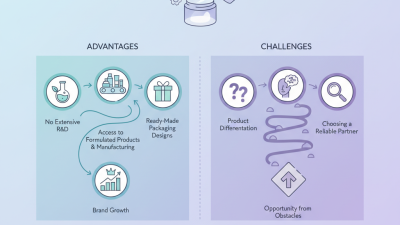
A manufacturer’s fit also depends on your business. A small startup may need flexible order sizes and guidance on packaging, while an established brand may prioritize production capacity and repeatability. Neither need is automatically better. Budget, launch timing, product type, and desired level of customization all shape the decision.

No comparison is perfect. Public information can leave gaps, and a smooth sales conversation cannot replace careful due diligence. Request current documentation, clarify responsibilities, and review sample products before committing. A pleasing texture in one jar does not prove every batch will perform the same. That part is easy to overlook.

The manufacturers featured in this overview offer different strengths, rather than one universal solution. Use the following profiles as a starting point, then confirm details directly with each company. A thoughtful match can support product quality and a stronger brand experience; a rushed choice may create avoidable friction later.

2026 Top Private Label Skin Care Manufacturers?

Understanding Private Label Skin Care Manufacturing

Private label skin care manufacturing means developing products that a retailer or founder sells under its own name. A manufacturer may supply a ready-made formula or develop one to meet a specific brief. McKinsey’s 2023 beauty-market analysis estimated global beauty sales at about $430 billion in 2022, with potential to reach $580 billion by 2027. That broader growth makes product differentiation important, but a crowded market does not guarantee demand.

A clear manufacturing brief should specify the product format, target skin feel, ingredient preferences, packaging, and expected order volume. Then ask how the manufacturer handles formulation revisions, stability testing, production records, and batch traceability. Request sample timelines and written specifications before committing. Check which testing is included, and which costs extra.

The process sounds neat on paper. In practice, revisions happen. A serum may feel sticky after drying, or a pump may leave product behind. Those details matter.

Tips: Compare manufacturers using the same brief, not just the lowest quote. Ask for relevant quality documents and a sample from a production batch, where available. Confirm minimum order quantities, lead times, and who supplies packaging. Keep notes on what you like and dislike; a vague brief can lead to expensive guesswork.

Key Criteria for Evaluating Skin Care Manufacturers in 2026

Choosing a private label skin care manufacturer in 2026 means checking more than a polished sample. Grand View Research valued the global skin care market at USD 115.65 billion in 2024 and projects 4.8% annual growth through 2030. That growth makes reliable production capacity important. Ask how the manufacturer controls ingredient suppliers, batch records, and quality checks. Request evidence of GMP practices, such as documented procedures aligned with ISO 22716. A certificate alone is not enough.

Review stability and packaging compatibility results for the exact formula and container. A cream that looks smooth in a jar may separate after heat exposure; a pump may clog during use. Ask for realistic minimum order quantities, lead times, and procedures for handling rejected batches. Confirm who owns formula changes and how each change is approved. I would still leave room for judgment: tidy paperwork cannot reveal every production problem. A factory audit and clear sample-testing plan can help fill that gap.

Tips: Request a recent batch record, stability summary, and written quality agreement before placing an order. Check that product claims have supporting evidence. Compare quoted costs with testing, packaging, and rework terms—not just the unit price.

Leading Private Label Skin Care Manufacturers to Consider

Private label skin care manufacturers differ in formulation depth, production scale, and documentation. Consider partners with in-house research teams, stability testing, and clear ingredient traceability. Ask how they test a moisturizer’s texture, scent, and performance after heat exposure. Request sample batches before approving a full production run. Small details matter.

Market data can guide the search, but it cannot guarantee demand. Grand View Research estimated the global skin care market at $115.65 billion in 2023 and projected 4.7% annual growth from 2024 to 2030. McKinsey’s 2023 beauty-industry report projected the broader beauty market could reach $580 billion by 2027, growing about 6% annually. These figures suggest opportunity, not an automatic sales win. Check whether a manufacturer supports your intended product type, order volume, packaging needs, and launch schedule. Review quality records and ask for realistic lead times. Some suppliers look efficient on paper. Their minimum orders may still strain a new business. A careful conversation can reveal that early.

Comparing Product Development, Compliance, and Production Capabilities

Choosing a private label skin care manufacturer in 2026 means comparing more than catalog breadth. Ask how product ideas become stable formulas: who reviews ingredient compatibility, tests texture, and records each revision? Request sample timelines, pilot-batch quantities, and clear ownership of formula documentation. A serum that feels elegant in a small sample may separate after repeated temperature changes. Check that stability and packaging-compatibility testing suit the product’s intended use. Small details matter.

Compliance support should be concrete, not a vague promise. A capable partner can provide current ingredient records, batch traceability, safety documentation, and label review for your intended markets. Confirm who updates records when a formula or supplier changes. Requirements differ by destination, so independent regulatory review may still be sensible. No shortcut here.

Production capacity is more than a large filling line. Compare minimum order quantities, lead times, quality checks, deviation handling, and scale-up controls. Ask how incoming materials are checked and how each batch is released. If demand grows, can a pilot formula move to commercial volume without changing its feel? Get answers in writing. Some gaps appear only later, and that is worth admitting. A manufacturer may excel at formulation but offer limited packaging options—or the reverse. Evaluate each capability against your launch plan, not a polished sales presentation.

2026 Top Private Label Skin Care Manufacturers? - Comparing Product Development, Compliance, and Production Capabilities

Comparison note: This table compares common private-label supplier capability profiles, not named manufacturers or a verified supplier ranking. Minimums, timelines, services, and compliance responsibilities vary by supplier, product, packaging, and market; confirm details directly before making a decision.

Capability profile Product development Typical order flexibility Indicative timing Compliance and quality support Best suited for
Stock-formula private label Selects from existing formulas; customization is generally limited to options such as fragrance, color, or packaging. Often more accessible than fully custom production; minimums still depend on the formula, filling line, and packaging. Usually the quicker route because formulation work is reduced; sampling, artwork approval, component sourcing, and production remain necessary. Ask for product specifications, ingredient documentation, relevant test records, and a clear account of which party handles market-specific labeling and notifications. New brands, test launches, and businesses prioritizing speed and a simpler development process.
Semi-custom development Adapts an existing base formula; requested changes may require compatibility, stability, or performance assessment. May require higher minimums than an unmodified stock formula, especially when ingredient or packaging changes are involved. Typically longer than choosing a ready formula; timing depends on the scope of changes and required testing. Confirm who approves formula changes, conducts or commissions testing, reviews claims, and prepares documentation for each intended market. Brands seeking product differentiation without developing every formula from the beginning.
Custom formulation and contract manufacturing Develops a formula to a product brief, ingredient preferences, performance targets, and manufacturing requirements; multiple sample rounds may be needed. Usually involves more development work and may have higher minimums; actual thresholds are supplier- and product-specific. Development and production can take longer than stock options because formulation, testing, sourcing, and approvals must be coordinated. Request evidence of quality systems, batch controls, traceability, change control, and the scope of safety and stability support. Certifications should be checked for site and scope. Established brands needing greater formula control, differentiated specifications, or a longer-term manufacturing partner.
Large-scale production partner May offer formulation and scale-up support, with capabilities varying by facility and product category. Often better aligned with larger, repeat orders; confirm capacity allocation, forecast requirements, and minimum run sizes. Lead times depend on production schedules, raw-material availability, packaging supply, and order size; obtain a written schedule for each order. Evaluate documented quality procedures, supplier controls, batch records, complaint handling, and any audits or certifications relevant to the specific facility. Brands with established demand that prioritize repeatability, capacity planning, and consistent supply.
Export-oriented manufacturing partner May support market-specific ingredient, language, packaging, and documentation requirements when agreed in the project scope. Order size and flexibility vary; international freight and packaging specifications can affect practical minimums and landed cost. Plan for production plus document review, shipping, customs clearance, and destination-market procedures. Confirm applicable market obligations, responsible-party roles, ingredient restrictions, label review, and export documents. A supplier’s support does not replace the brand owner’s legal review. Brands planning cross-border sales and able to coordinate import, labeling, and regulatory responsibilities.

Due-diligence checklist: Request a written quotation, minimum order quantities by SKU and packaging type, a milestone-based timeline, formula and test documentation, quality-system evidence, a packaging compatibility plan, and a clear allocation of regulatory responsibilities. Cosmetic requirements differ by jurisdiction and product claims.

How to Choose a Manufacturer for Your Skin Care Brand

Choosing a private label skin care manufacturer starts with the product you actually plan to sell. A light lotion, for example, needs different texture and packaging checks than a thick balm. Ask how the manufacturer handles formulation, ingredient sourcing, minimum order quantities, and production timelines. Request samples, then assess them in the intended container. Does the pump clog? Does the cream separate after repeated use? Small details matter.

Ask for relevant quality procedures and examples of batch documentation. Confirm how changes to ingredients or packaging are communicated, and who handles testing and production records. Clear answers are more useful than a glossy presentation. Ask about stability and compatibility testing, while remembering that results depend on the specific formula and package. Get responsibilities in writing.

Visit the facility if practical, or request a live video walkthrough. Look for clean work areas, organized material storage, and staff who can explain their process plainly. A polished tour can still leave questions unanswered. That is worth noticing. Compare more than price: a low quote may exclude testing, packaging, or setup costs. Check references where available, and speak directly with the people managing your account. Communication can be uneven, even with a capable team. Choose a manufacturer whose limits, timelines, and next steps are stated clearly.

Social media & sharing icons powered by UltimatelySocial
Facebook
LinkedIn
Instagram
Tiktok