
cold lamination is becoming an important finishing process for sign makers, print service providers, and packaging specialists worldwide. It protects printed surfaces without heat, reducing the risk of ink distortion, adhesive activation, or substrate deformation. A typical job may involve a 1.6-meter vinyl graphic, a pressure-sensitive film, and a carefully controlled nip pressure. Small settings can affect clarity, edge adhesion, and production waste.
Industry reports support this wider demand. Smithers’ digital print market studies identify continued growth in short-run, customized, and on-demand printing applications. These applications often require fast protective finishing. Grand View Research also reports sustained expansion in commercial printing and signage-related markets, where visual durability remains a purchasing priority. However, report definitions differ. Some include laminating films, while others measure complete finishing equipment. That makes direct supplier comparisons imperfect.
This article reviews the top 10 cold lamination machine suppliers worldwide through practical criteria. These include machine stability, working width, roller design, automation, service coverage, and spare-parts availability. Energy use and operator safety also matter. A low purchase price can become expensive when alignment errors repeatedly waste film. Experience from real production environments often reveals more than a catalogue specification. Still, no supplier fits every workshop. A compact manual laminator may suit a local signage studio, while an automated industrial line may better serve high-volume converters. The ranking should therefore be read as a market guide, not an absolute verdict.
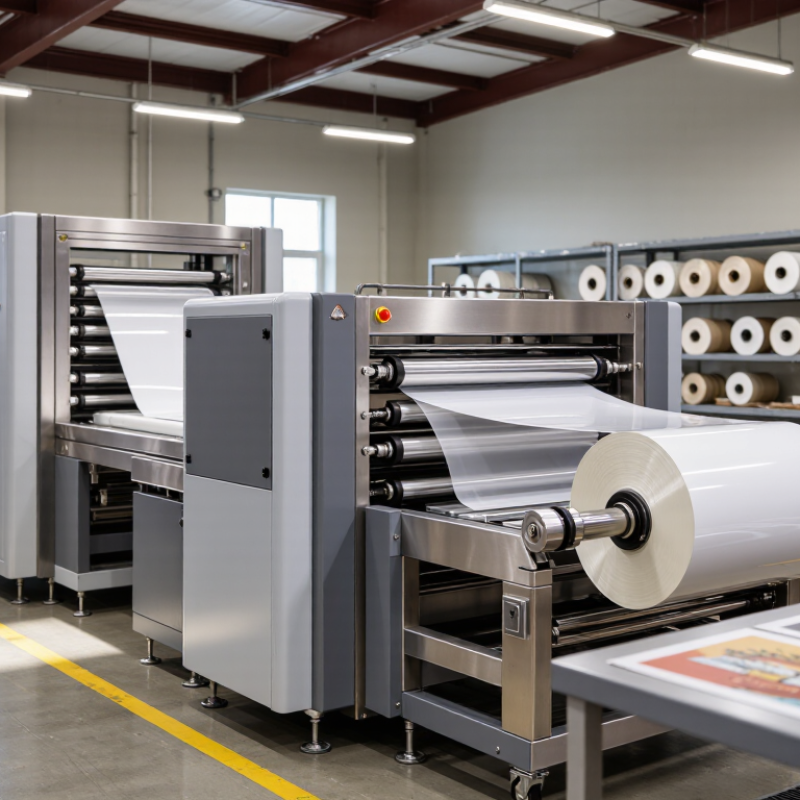
Cold lamination machines protect printed materials without heat. They use pressure-sensitive adhesive film instead. The film passes between rollers and bonds to the surface under controlled pressure. A release liner is removed during feeding, while the operator guides the print through the nip point. Even pressure helps prevent wrinkles, silvering, and trapped air. Pressure matters.
Common machine types include manual, desktop electric, wide-format, and roll-to-roll models. Manual units suit short runs and occasional signage. Electric models provide steadier speed for offices, print shops, and classrooms. Wide-format machines handle posters, maps, and photographic panels. Roll-to-roll systems support continuous production but require more floor space and operator training. Bigger is not always better.
Key specifications include maximum working width, laminating speed, roller diameter, core diameter, and acceptable material thickness. Check whether pressure adjustment is mechanical or automatic. A machine may accept a 1,600-millimeter roll, yet its actual usable width can be smaller. Review power requirements, noise levels, emergency controls, and cleaning access before purchase. In practical testing, feed alignment often matters more than advertised speed. A fast machine can still waste media through skewed loading. Test several paper weights and film types, because adhesive performance changes with humidity and surface texture. Supplier reliability also depends on parts availability, clear manuals, training, and responsive technical support. One detail is easy to miss: uneven rollers may create repeating bubbles that appear only after cooling.

Top 10 Cold Lamination Machine Suppliers Worldwide
The global cold lamination equipment market is estimated at USD 1.1–1.4 billion in 2024. Industry forecasts suggest a 5%–7% CAGR through 2030, although estimates differ by research method. Demand is strongest in commercial printing, retail graphics, schools, and short-run packaging. Many buyers now prefer compact machines with adjustable pressure and working widths between 650 and 1,600 millimeters. These specifications support posters, labels, photographs, and point-of-sale materials without thermal damage. Film prices and local installation costs still affect total ownership expenses.
The leading ten supplier groups compete through automation, stable feeding systems, and service coverage across Asia, Europe, North America, and emerging markets. Buyers increasingly request waste-reduction controls, low-noise motors, and quick-change rollers. Solvent-free adhesive films are also gaining attention because operators want cleaner indoor production. Used equipment remains common among small print shops, but maintenance history matters greatly. A worn pressure roller can create silvering, wrinkles, or uneven adhesion within minutes. That detail is easy to overlook. Market growth may slow if digital print volumes weaken or imported components become expensive. Some forecasts also assume faster adoption than many regional distributors currently observe. Local training, spare-part availability, and realistic throughput data should therefore influence supplier comparisons more than advertised speed alone.
Global market size, CAGR, and demand trend for cold lamination equipment
The chart shows estimated global revenue for cold lamination equipment, excluding supplier-level data. Demand is supported by growth in signage, digital printing, vehicle graphics, education materials, and short-run commercial printing. Figures are market estimates synthesized from publicly reported industry-study ranges and should be used for directional analysis.
Top 10 Cold Lamination Machine Suppliers Worldwide?
When comparing cold lamination machine suppliers, speed should match real production needs. A machine rated at 15 meters per minute may slow significantly with thick film or uneven media. Measure usable speed, not the headline figure. Smithers’ 2024 digital print outlook reports continued growth in short-run and customized print, increasing demand for flexible finishing equipment. That demand makes stable speed more valuable than maximum speed alone.
Film width affects both productivity and waste. Common professional systems support widths from 650 to 1,600 millimeters, but buyers should check actual working width. Pressure control is equally important. Pneumatic or adjustable roller systems can reduce silvering, bubbles, and edge lifting. In my experience, small pressure changes become obvious on textured boards. The specification sheet rarely shows this weakness. Ask for sample tests using your own film and substrate.
Energy use deserves a measured review. Record standby consumption, warm-up requirements, and power under continuous operation. Some cold systems need little heat, yet motors and compressors still draw electricity. The International Energy Agency reported that industrial energy efficiency remains a major emissions-reduction opportunity in its Energy Efficiency 2023 analysis. A practical comparison should calculate kilowatt-hours per 100 finished square meters. The calculation is not perfect. Operator habits, maintenance, and film tension can distort results. Still, it is more useful than comparing motor wattage alone.
The top ten cold lamination machine suppliers should be judged by technology and market reach, not visibility alone. A useful comparison covers pressure-sensitive adhesive control, roller accuracy, web tension, speed, and substrate compatibility. Suppliers offering manual, semi-automatic, and fully automatic models serve different production realities. Small sign shops need simple controls, while packaging plants require stable, continuous operation.
Smithers’ The Future of Digital Print for Packaging to 2028 estimates that digital packaging print will grow from about USD 22 billion in 2023 to USD 36.9 billion by 2028. This expansion supports demand for reliable finishing equipment. Grand View Research also reports strong growth in self-adhesive labels, driven by shorter runs and customized graphics. These figures do not rank cold lamination suppliers directly. However, they show why flexible finishing technology matters. Supplier reach should include regional service centers, spare-parts availability, installation training, and documented safety procedures.
The strongest ten candidates usually combine precision rollers with broad export coverage. Some focus on high-speed industrial lines. Others compete through compact machines, lower power use, or easier maintenance. Warranty terms deserve close inspection. A low purchase price may hide expensive downtime. No ranking is flawless, because published specifications rarely reveal long-term adhesive consistency. Buyer trials remain essential. Samples should be tested with textured films, sensitive prints, and different humidity levels. One overlooked issue can change the result.
| Rank | Supplier ID | Primary Technology Focus | Typical Machine Configuration | Supported Media Width | Automation Level | Key Application Areas | Geographic Market Reach | Service and Integration Capability | Overall Position |
|---|---|---|---|---|---|---|---|---|---|
| 1 | Supplier 01 | Industrial pressure-sensitive cold lamination with pneumatic nip control | Roll-to-roll, dual-roll unwind and powered rewind | Up to approximately 1.6–1.7 m | High; digital tension and pressure adjustment | Wide-format graphics, vehicle wraps, signage and display films | Global | Strong distributor coverage, operator training and production-line integration | Very strong |
| 2 | Supplier 02 | Wide-format cold laminating using adjustable silicone or rubber rollers | Single- or dual-heated auxiliary roller with cold-film capability | Up to approximately 1.6 m | High; programmable speed and nip settings | Digital print finishing, photo protection, posters and retail graphics | Global | Good technical support and compatibility with common digital-print workflows | Very strong |
| 3 | Supplier 03 | Heavy-duty cold laminating for continuous sign and graphics production | Floor-standing roll-to-roll system with powered take-up | Approximately 1.3–1.6 m | High; closed-loop web-tension control on advanced models | Outdoor signage, floor graphics, wall coverings and protective overlays | Global and regional | Good spare-parts availability and production-floor commissioning | Very strong |
| 4 | Supplier 04 | Compact pressure-sensitive film application technology | Manual or semi-automatic cold laminator with adjustable roller gap | Approximately 1.1–1.4 m | Medium; manual alignment with powered roller options | Small print shops, office graphics, photographs and short-run signage | Global | Simple installation, accessible maintenance and broad reseller support | Strong |
| 5 | Supplier 05 | High-accuracy cold lamination for high-value printed graphics | Precision roller assembly with programmable speed control | Approximately 1.3–1.6 m | High; digital controls and repeatable pressure settings | Fine-art reproduction, photographic output, labels and premium signage | Global and regional | Strong process consistency and compatibility with finishing equipment | Strong |
| 6 | Supplier 06 | Entry-level and mid-range cold film mounting technology | Benchtop and floor-standing roll laminators | Approximately 0.7–1.6 m | Medium; manual setup with powered feed and rewind | Indoor signs, posters, school graphics and short-run commercial printing | Global through distributors | Good value-oriented support and straightforward operator maintenance | Strong |
| 7 | Supplier 07 | Cold lamination combined with mounting and board-application functions | Multifunction finishing table or hybrid laminating system | Approximately 1.0–1.6 m | Medium to high; selectable operating modes | Foam-board mounting, rigid media, exhibition graphics and retail displays | Regional with international exports | Useful for integrated finishing cells and customized installation projects | Strong |
| 8 | Supplier 08 | Economical cold lamination using mechanical pressure adjustment | Manual or semi-automatic roll-to-roll construction | Approximately 0.65–1.6 m | Basic to medium; operator-controlled alignment and pressure | General signage, posters, educational graphics and packaging samples | Regional and export markets | Competitive pricing, simple parts structure and low training requirements | Competitive |
| 9 | Supplier 09 | Specialized laminating for textile, wallpaper and flexible substrates | Wide-web configuration with low-tension material handling | Approximately 1.3–1.8 m | High; substrate-tension and roller-pressure adjustment | Textile graphics, wallpaper, décor films and flexible digital media | Regional with selected global projects | Application engineering is important for substrate-specific installations | Niche leader |
| 10 | Supplier 10 | Custom cold lamination and converting systems for industrial users | Engineered roll-to-roll line with optional slitting or inspection modules | Configured to order; commonly 1.0–2.0 m | High; customized controls and line integration | Industrial films, specialty labels, flexible materials and contract converting | International project-based | Strong customization, but longer engineering and commissioning cycles | Specialized |
Comparing ten global suppliers requires more than checking machine prices. Their equipment may serve signage, vehicle graphics, photo mounting, labels, or protective films. A 1.6-meter roller suits wide-format work, while compact models fit small print rooms. Ask about pressure adjustment, roller hardness, media thickness, and daily operating capacity. These details affect image quality and operator fatigue.
Certifications deserve careful verification. Look for documented electrical safety, electromagnetic compatibility, and quality-management systems such as ISO 9001. Regional marks may include CE, UKCA, or equivalent approvals, but certificate scope matters. Do not trust a logo alone. Request the certificate number and covered model. Warranty comparisons should include rollers, motors, control boards, labor, shipping, and response times. A twelve-month warranty may be weaker than a shorter warranty with local service support. That is an uncomfortable detail, but it matters.
Tips: Calculate total cost of ownership before choosing. Include freight, installation, training, electricity, replacement rollers, cleaning materials, and possible downtime. Ask for a sample lamination test using your actual film and substrate. Check whether spare parts remain available after five years. A cheaper machine can become expensive after one damaged roller. I would also record noise, warm-up needs, and ease of pressure adjustment during testing. Buyers sometimes overlook these practical points. They should not.